RSS

❄️ Should You Sell Your Home in December? What the Last 5+ Years of Data Actually Say

Date range analyzed: December 1–30, 2025
Market snapshot (Dec 2025):

  • Active listings: 924

  • New listings: 150

  • Homes sold: 295

Every winter, I hear the same thing:

“We’ll wait until spring. Nobody buys in December.”

But when you look at the data — not the assumptions — a very different story shows up.

December isn’t a dead month. It’s a filtered month. And for the right seller, that can actually work in your favour.

Let’s walk through what the numbers tell us, how this December compares to past years, and how to approach selling during the winter months without putting yourself at risk.


Is December Really a Bad Time to Sell?

Short answer: No.
Long answer: It depends on how you sell.

Sales activity has occurred every December for years — even before the pandemic, during rate hikes, and through market corrections. What changes isn’t whether homes sell — it’s which homes sell.

To understand that, we need context.


📈 December Home Sales Over Time
December Home Sale 2025

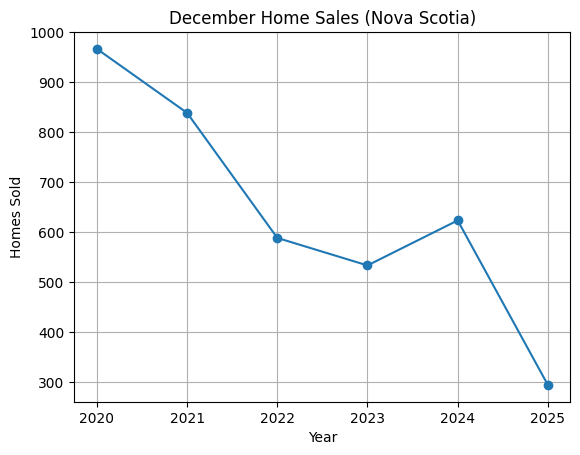
December Home Sales in Nova Scotia (2020–2025)

December sales have remained consistent year-over-year, even as market conditions shifted dramatically.

This graph shows one important truth:
buyers never completely leave the market in December.

Yes, 2021 was an extreme outlier. But even after interest rates rose and activity cooled in 2022–2024, homes continued to sell every winter.

December 2025 followed that same pattern — fewer listings, fewer sales overall, but meaningful movement.


The Stat That Actually Matters: Absorption Rate

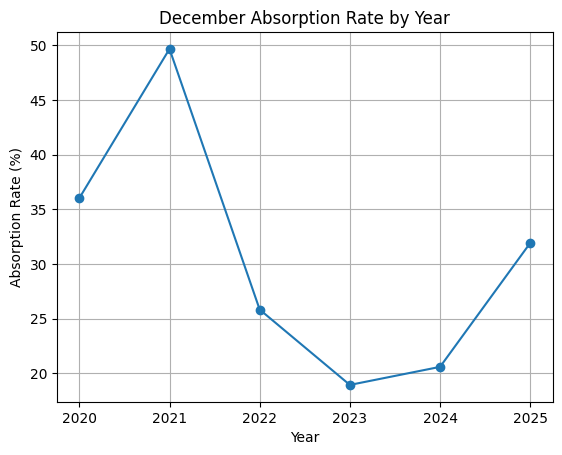
Raw sales numbers don’t tell the full story. What really matters is absorption rate — how much of the available inventory actually sells.


📊 December Absorption Rate by Year
December Absorption Rate: How Much of the Market Actually Sells

December 2025 absorption rebounded above the last two years, indicating stronger buyer commitment.

In December 2025:

  • 295 homes sold

  • 924 active listings

  • Absorption rate: ~32%

For comparison:

  • December 2023 hovered under 20%

  • December 2024 sat just over 20%

  • Pandemic years were artificially inflated

A ~32% absorption rate in December is healthy. It tells us buyers weren’t browsing — they were acting.


Why December Buyers Are Different

Winter buyers usually fall into three categories:

  1. Relocations or job changes

  2. Life-driven moves (separation, family needs, downsizing)

  3. Prepared buyers who are done waiting

These buyers are:

  • decisive

  • pre-approved

  • less emotional

  • less likely to “just look”

Which means they don’t waste time.


Supply vs Demand: The Quiet Advantage for Sellers

Now here’s the most overlooked winter stat.


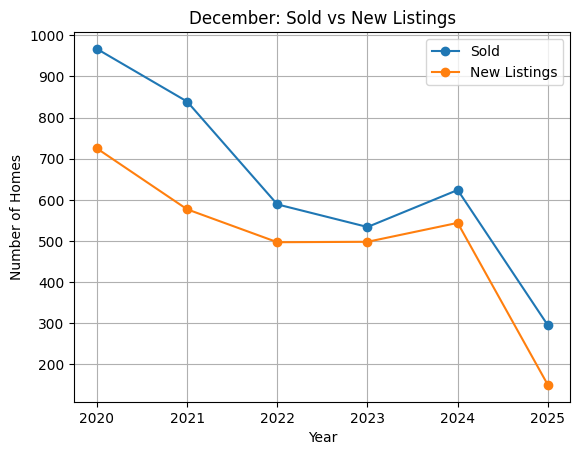
🔁 Sold vs New Listings in December
December Buyer Demand vs New Supply

In December 2025, sales significantly outpaced new listings — creating quiet pressure on available homes.

In December 2025:

  • 295 homes sold

  • 150 new listings

That means demand nearly doubled the new supply.

This is why well-priced, well-presented homes can still sell quickly in winter — they’re competing against fewer alternatives.


How to Win as a Winter Seller

Selling in December isn’t about testing the market. It’s about precision.

1️⃣ Price correctly from day one

Winter buyers don’t want “try it and see.”
They want value that makes sense today.

2️⃣ Presentation matters more than ever

Clean, bright, staged, and move-in ready beats “potential” every time in winter.

3️⃣ Marketing has to work harder

Fewer listings mean more eyes — if your home earns attention with:

  • strong photos

  • clear descriptions

  • flexible showings


🎄 If Your Home Doesn’t Sell, You Have Smart Options

This is where good advice matters most.

Option A: Pause over the holidays

If showings slow around Christmas, pulling the listing can:

  • protect days on market

  • avoid buyer fatigue

Option B: Relist with intention in January

Fresh photos, refreshed copy, renewed exposure.

Option C: Make a strategic price correction

January brings new buyers.
A thoughtful adjustment can outperform weeks of inactivity.

Option D: Pull and plan for spring

If your home benefits from:

  • landscaping

  • daylight

  • exterior appeal

Then spring may be the better stage — but use winter to prepare, not wait.


🧭 The Bottom Line

December isn’t the wrong time to sell.
It’s the wrong time to guess.

The data shows:

  • Homes sell every winter

  • Buyers are serious

  • Competition is lower

  • Strategy matters more

If you’re thinking about selling this winter — or deciding whether to pause and relaunch — the smartest move is having a plan before the market gives feedback.


🔧 Want a Winter Selling Strategy Built for Your Home?

I’ll walk you through:

  • pricing scenarios

  • winter vs spring outcomes

  • and a clear Plan B if the market doesn’t respond

📞 Call or text (902) 903-6605
Or reach out and I’ll put together a custom winter strategy for your property.

Read

Should You List Your Home This Winter? The Surprising Truth About Holiday Season Sales in Nova Scotia

When most Nova Scotia homeowners think about selling their property, they imagine warm spring days with blooming gardens and bright sunshine streaming through windows. The conventional wisdom suggests waiting until April or May when the market "wakes up" and buyers flood open houses. But what if I told you that listing during the winter months—yes, even during the holiday season—might actually be one of the smartest strategic decisions you could make?

Let's dive into the real data and explore why winter listings deserve a second look.

The Reality of Winter Real Estate in Nova Scotia

I won't sugarcoat it: winter is historically the slowest season for real estate activity in Nova Scotia. The numbers tell a clear story. During the peak summer months, the market sees between 1,100 and 1,400 home sales. Compare that to winter months, which typically range from approximately 550 to 750 units sold. That's nearly half the activity.

Additionally, homes tend to spend more time on the market during winter. Recent data shows the median days on market reached 48 days in the first quarter of 2025, compared to lower figures during the busier summer months. These statistics are what drive most sellers to wait for spring.

But here's where it gets interesting: lower activity doesn't necessarily mean worse outcomes for sellers who understand how to leverage winter's unique advantages.

The Challenges: What You're Up Against

Before we explore the opportunities, let's acknowledge the legitimate challenges of winter listings. Understanding these obstacles helps you prepare and potentially turn them into advantages.

Weather and Curb Appeal: This is the most obvious hurdle. Snow-covered lawns, bare trees, and grey Maritime skies don't exactly scream "dream home." Your property's exterior charm—one of the most powerful selling tools—is significantly diminished. Icicles hanging from gutters and snow banks lining the driveway don't photograph as beautifully as summer gardens and manicured lawns.

Fewer Active Buyers: With substantially lower sales volumes, you're working with a smaller pool of potential buyers. Many people simply postpone their home search until spring, choosing to enjoy the holidays rather than trudge through showings in winter boots.

Logistical Complications: Winter weather creates practical challenges. Showings become more complicated when driveways need constant clearing. Moving during a snowstorm is nobody's idea of fun. Even the simple act of maintaining your home in "showing ready" condition becomes more demanding when you're constantly tracking in snow and salt.

Holiday Distractions: During November and December specifically, potential buyers are focused on family gatherings, holiday shopping, and year-end work deadlines. Real estate often takes a backseat to seasonal priorities.

These are real concerns, and any agent who dismisses them isn't being honest with you.

The Hidden Advantages: Why Winter Could Be Your Secret Weapon

Now for the counterintuitive truth: these very challenges create opportunities for savvy sellers.

Dramatically Reduced Competition: When sales volumes drop by nearly 50%, so does your competition. In a typical spring market, dozens of comparable homes might be competing for the same buyers. In winter, you might be one of only a handful of options in your neighborhood or price range. Your listing doesn't get lost in the noise—it stands out.

Think about it from a buyer's perspective: they open their real estate app and see 15 homes in summer versus 5 homes in winter. Which listings get more attention and closer scrutiny?

Serious Buyers Only: Here's a crucial insight that many sellers miss: winter buyers are typically the most motivated buyers. Nobody casually browses open houses in January snowstorms. People looking at homes during the holidays are doing so because they need to—job relocations, life changes, growing families, divorces, or other circumstances that can't wait for spring.

These buyers often have deadlines, which can work in your favor during negotiations. They're not dreamers or tire-kickers; they're ready to make decisions and move forward.

Better Negotiating Position (Sometimes): While winter presents reduced competition among buyers, it also surfaces more motivated sellers. However, if you're not under time pressure and your home shows well, you can actually be the exception—the well-presented, fairly-priced option that captures serious buyers without appearing desperate.

Early Access to Spring Buyers: Many serious buyers begin their search in January and February even if they're not ready to move until spring. By listing in winter, you capture these early researchers who are getting a head start on the market. When spring arrives and competition floods back in, you may have already found your buyer.

Making Winter Work: Strategic Considerations

Success with a winter listing requires honest assessment and smart preparation.

Your home needs to show exceptionally well despite the weather. This means maintaining a clear driveway and walkways, ensuring excellent heating (buyers notice cold houses immediately), creating warm and inviting interior staging, and maximizing lighting to combat grey winter days.

Pricing becomes even more critical in a slower market. You can't command premium pricing when there are fewer buyers competing. However, competitive pricing in a less crowded market can generate faster results than overpricing in a busy spring market.

Professional photography matters more in winter because buyers rely heavily on online listings. Consider twilight photos that showcase warm interior lighting, virtual tours that let buyers explore from home, and professional editing that makes winter scenes look appealing rather than bleak.

The Bottom Line: Is Winter Right for You?

Winter listing isn't right for everyone, but it's worth serious consideration if:

  • Your home shows well year-round with good bones and interior appeal

  • You're pricing competitively and realistically

  • You need to sell on your timeline, not the market's timeline

  • You appreciate the value of less competition

  • Your property has features that shine in winter (amazing heating system, cozy fireplace, winter views)

Most sellers wait for spring because that's what everyone does. But smart sellers recognize that when everyone else zigs, there might be opportunity in zagging. Winter presents reduced competition and motivated buyers—a combination that shouldn't be dismissed simply because it's unconventional.

The question isn't whether winter is the "best" time to list. The question is whether winter's unique advantages align with your specific situation, property, and goals. For the right home with the right preparation and pricing, winter might just be your competitive edge.

Ready to explore whether a winter listing makes sense for your property? Let's discuss your specific situation and create a strategy that works for you—regardless of the season. Book a Call Here!

Read
Categories:   103-Malagash, Wentworth, Northern Region Real Estate | 104-Truro / Bible Hill, Northern Region Real Estate | 104-Truro/Bible Hill/Stewiacke, Northern Region Real Estate | 105-East Hants/Colchester West, Halifax-Dartmouth Real Estate | 108-Rural Pictou County, Northern Region Real Estate | 11-Dartmouth Woodside, Eastern P, Halifax-Dartmouth Real Estate | 12-Southdale, Manor Park, Halifax-Dartmouth Real Estate | 16-Colby Area, Halifax-Dartmouth Real Estate | 17-Woodlawn, Portland Estates, N, Halifax-Dartmouth Real Estate | 2026 Halifax Real Estate Market | 2026 Real Estate Market | 2026 Real Estate Predictions | 209-Victoria County / Baddeck, Cape Breton Real Estate | 30-Waverley, Fall River, Oakfiel, Halifax-Dartmouth Real Estate | 31-Lawrencetown, Lake Echo, Port, Halifax-Dartmouth Real Estate | 35-Halifax County East, Halifax-Dartmouth Real Estate | 4-Halifax West, Halifax-Dartmouth Real Estate | 40-Timberlea, Prospect, St. Marg, Halifax-Dartmouth Real Estate | 5-Fairmount, Clayton Park, Rocki, Halifax-Dartmouth Real Estate | 5-Fairmount, Clayton Park, Rockingham, Halifax-Dartmouth Real Estate | 7-Spryfield, Halifax-Dartmouth Real Estate | Buying your home in East Hants | Client Stories | East Hants | East Hants Real Estate | Elmsdale | Enfield | Fall 2025 Market Report | First Time Home Buyer | Halifax | Halifax Dartmouth Real Estate | Halifax Housing Market | Halifax Market Update | Halifax Real Estate | Hants County, Annapolis Valley Real Estate | Home Buying Tips | Home Prices | Homes For Sale | HRM Real Estate | HRM Real Estate, Dartmouth Real Estate, East Hants and Halifax REALTORS, The McCooeye Group, Royal LePage Atlantic, | Kings County, Annapolis Valley Real Estate | Lantz | Market Trends | Nova Scotia Housing Market | Nova Scotia Real Estate | Real Estate Advice | Real Estate Information | Real Estate Market Report | Real Estate Market Update | realtor | Selling my home in Dartmouth | Selling my home in Halifax | Selling your Home in East Hants | selling your home in winter | Success Stories | winter