
If you have shopped for a home in Halifax Regional Municipality or out here in East Hants lately, you have probably heard the word “conditions” thrown around and nodded along without anyone slowing down to explain it. That is a shame, because the conditions in your offer are where a lot of the real protection lives. Get them right and you buy with confidence. Get them wrong and you can end up either exposed to risk or watching a great home go to someone else. Let me walk you through what conditions actually do, the ones I see most often on our deals, and how buyers and sellers can each work with them.
What the conditions in your offer really do
A condition (sometimes called a “subject” or a “contingency”) is simply a box that has to be checked before your purchase becomes firm. Until every condition is either met or waived, either side generally has a way out. Think of the period between accepting an offer and going firm as a short window where you confirm that the home is what you think it is, that your financing is real, and that you can insure and afford it. Conditions turn a hopeful “yes” into an informed “yes.”
The conditions I see most in HRM and East Hants
Financing. Even buyers who are pre-approved include a financing condition, because a pre-approval is not a final approval. Your lender still has to sign off on the specific property. If a tax bill is out of date or an appraisal comes in light, this is the condition that gives you room to sort it out rather than scramble.
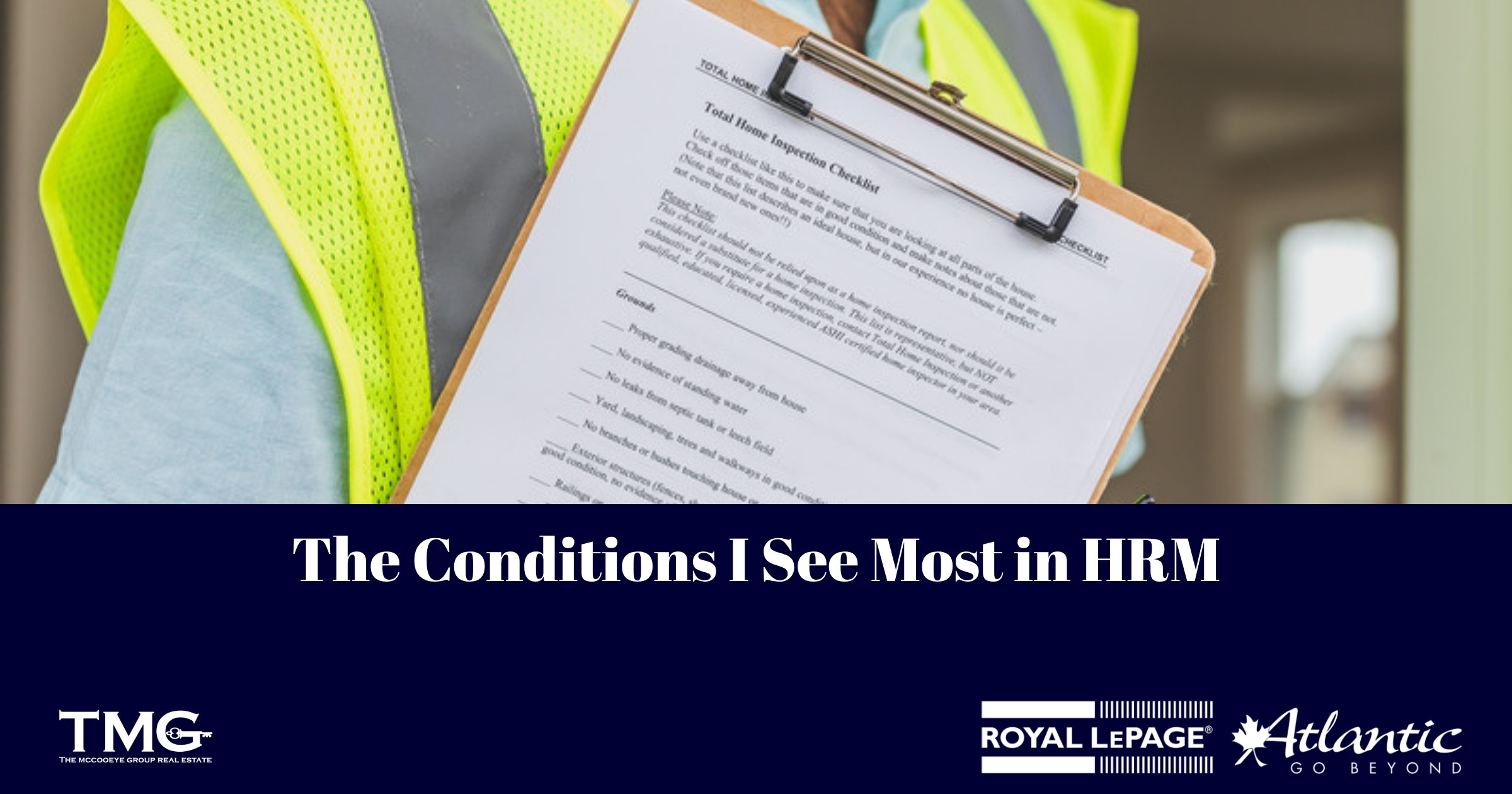
Home inspection. A qualified inspector walks the home and tells you what you are really buying. Out here, that often means paying attention to things a city buyer might not think about: the age of the roof and heat source, foundation and moisture, and whether an older addition was done properly. If the inspection turns up something serious, you can renegotiate, ask for a repair, or walk away.
Water and septic. A lot of homes in Enfield, Elmsdale, Lantz, Shubenacadie and the surrounding communities are on well and septic rather than municipal services. A water-quality test and a septic inspection are not just formalities here; they are how you avoid an expensive surprise a month after closing. I almost always recommend them for rural properties.
Insurance. It is worth confirming early that you can actually insure the home at a reasonable cost. Older wiring, a wood stove, or an oil tank can affect what an insurer will offer, and you want to know that before you go firm, not after.
Lawyer’s review. Your lawyer reviews the title, the Property Condition Disclosure Statement, and any documents tied to the property. This is the quiet condition that catches boundary issues, easements, or paperwork that does not line up.
If you are buying
Conditions are your friend, but they are not free. Every condition you add is something a seller has to weigh, and in a situation with more than one offer, a cleaner offer can win even at the same price. My advice is to be deliberate: keep the conditions that genuinely protect you, do your homework quickly so the condition period is short, and line up your inspector and lender before you write, not after. Preparation is what lets you make a strong, protected offer at the same time.
If you are selling
When you are reviewing offers, do not look at price alone. A slightly lower offer with fewer conditions and a realistic timeline can be worth more than a higher one stacked with contingencies that may never clear. Ask the practical questions: Is the financing solid? How long is the condition period? Is anything unusual attached? A little bit of preparation on your side also helps enormously. Having your own recent well and septic records, a clean disclosure statement, and any permits for past work ready to go removes the very friction that makes conditions drag on.
The bottom line
Conditions are not red tape and they are not a reason to panic. They are the tools that let a deal come together with both sides knowing what they are getting into. The buyers and sellers who do best are simply the ones who understand what each condition is for and prepare ahead of time so the process moves. That is exactly the part of the job I enjoy most: getting ahead of the details so my clients can make confident decisions.
If you are thinking about buying or selling in HRM or East Hants and you want to talk through how to structure an offer, or how to prepare your home so offers come in clean, I would be glad to help. Reach out to me or anyone on The McCooeye Group and let us make a plan together.
By Don McCooeye, CD, BA, MA, SRES, CIPS | Royal LePage Atlantic
Helpful links: Nova Scotia property disclosure statement guide · Nova Scotia Real Estate Commission
Keep Reading
More Resources From
The McCooeye Group